Monday, January 4, 2016

How I Became An Interim Artistic Director


How I Became An Interim Artistic Director

This post is the first of an ongoing series about my adventures and escapades as the Interim Artistic Director at the Hangar Theatre in Ithaca, New York.  


How did I become an interim artistic director?

Four hours before I boarded a plane to Istanbul, I received an email from Margaret B. Shackell, the president of the Hangar Theatre Board.  The artistic director was stepping down. I had been recommended. Was I interested in applying for the Interim Artistic Director position at the Hangar Theatre, in Ithaca, New York?

You bet your ass I was.

I thought about emailing Margaret back, but then decided against it – I would be in transit for a day, and I knew they wanted to act fast.  Besides, everybody knows that fortune favors the bold. So instead I googled her and discovered she was also an accounting professor at Cornell.  I found her office number online. When I called, it rolled to voicemail. Her cellphone number was on the outgoing message. I called her cell.  She picked up. I told her I really wanted this job, and I would write a letter before I got on the plane. (Thanks, Rafa, for packing for us both – I’d love to pretend this is because I had to write that letter, but we both know you’d have done it anyway because I hate packing so very very much)


The Hangar Theatre is a 350-seat thrust in Ithaca. The first summer I spent there was in 2001, as a Drama League Directing Fellow.  The second was two years later, when then-Artistic Director Kevin Moriarty invited me back to direct Julius Caesar with the Lab Company, which would later be re-mounted as a school tour.  Here are a list of people I met during those two summers with whom I’m still in touch, all this time later:

Dana Harrell
David Snider
Lindsey Gates
Kevin Moriarty
Lisa Bushlow
Bob Moss
Kali Quinn
Lyndsay Ruotolo
Tom Picasso
Josh Canfield
Courtney Bell
Noshir Dalal
Jennifer Joan Thompson
Amy Schluennes
Emily Fink
Ian Lowe
Jade Rothman
Rachel Fleit
Dan Knechtges
Wendy Dann 
Adam Zonder


That’s how many I can list off the top of my head, and the easiest way for me to show how influential those summers were to me.  The inimitable and magic nature of the Hangar didn’t stop for me with the people I met and the collaborations I formed. It had to do with what was expected of me as an artist.  

As a Hangar Drama League director, working in the Wedge (the experimental second stage) was the first time in my professional life that I was given the space to choose what I wanted to direct. It was a luxury to which I was so unused that it bewildered me at first: what kind of work did I want to make? What was important to me? What did I need to communicate to the world?

I did not direct this Wedge show but I found the picture online and I loved it so I'm using it because the internet didn't exist when I was in the Lab. Neither did electricity.
I directed four (4!) plays that summer: The Liddy Plays by Brooke Berman (world premiere), Orilla del Mundo by Hillary Bell (original musical), Peter Rabbit and Me (KIDDSTUFF) and The Pelican by Strindberg.  I think it’s safe to say that the Hangar is the only place where someone could have directed two world premieres, a children’s play, and one of Strindberg’s most nefarious drawing room plays all in the span of two months.

When I returned, two summers later, to work on Julius Caesar, I brought with me two designers whose work and friendship would have profound influences on me in the future: Oana Botez on costumes, and Mimi Lien on sets (MacArthur Genius Grant Recipient, 2015).  It was the first time I got to direct Shakespeare professionally. It was where I met and first cast Lab Company member Jennifer Joan Thompson, with whom I've worked at least ten times since, including my off-Broadway premiere. Jennifer is also a writer now, and I was honored when she asked me to direct her first piece, Booksmart at Studio Tisch.  Fellow Vassar alum Emily Robin Fink and Noshir, this awesome ninja I’d met in Rochester a few years earlier were in that production as well, as you will see when you check out the awesome lab video we’re making this year.

Downtown Ithaca.  I mean, come on.
I’ve had the privilege of directing at Syracuse Stage a few times over the last decade, during Tim Bond’s tenure (and whoever takes over – please remember me! I love it there!).  At least once during every rehearsal process, I’d drive down to Ithaca, poke my head into the Hangar, admire the renovation, and say hi to whoever was in the office downtown.  It’s that kind of place.  It stays with you. I’ve directed god-knows how many productions at this point in my life, professionally and at colleges, but the ones I did at the Hangar stay with me. I remember the people I met there.  It changes you.  It had a huge influence on me as a young artist, and continues to do so now that I’m no longer that young of an artist.

You bet your ass I wanted that job.

The 2016 season, which out-going Artistic Director Jen Waldman had already chosen, is glorious.


In Istanbul, I found out I would be granted an interview. Two days later, over Skype, from Bulgaria, said interview occurred by the Search Committee (comprised of Margaret, a few other board members and Managing Director Josh Friedman).    Luckily, I had been a finalist to be the Artistic Director of a LORT theater a few months before, so I could anticipate many of the questions that would be asked.  

Here are some of them:

  1. What kind of artists do you like to work with?
  2. What role do you think the Hangar should play in its community?
  3. Describe your leadership style.
  4. Which plays would you want to direct and how would you market the season?
  1. What kind of artists do you like to work with?
An Upstarts Event.
I answered this question with the criteria I use to determine whether or not I’m going to ask someone to join my NYC-theater company, The Upstart Creatures.  Every other month, the Upstarts present a reading of a socio-politically relevant play and prepare a four-course meal to accompany the piece.  And the whole thing is free. We don’t get paid to rehearse, we don’t get paid to cook. And we pride ourselves on presenting top-caliber readings and delicious food. 


The criteria I use is: brilliant, hard-working, and kind.  Brilliant is a must. We work in a saturated market.  As the e-mails flooding the Hangar casting e-mail account remind me daily, the competition in our field is crushing.  That means that brilliance is the price of admission.  Next,  given the relatively challenging material our company is drawn to (one of our criteria for the plays we pick: if you can see it on Broadway, we don’t need to do it), the only way to present a reading of the caliber that will make us proud is by using hard-working actors who are willing to work on the material outside of the 4-hour rehearsal we schedule, the way any director worth their salt needs 10 hours of prep to knock a reading out of the ballpark.  Finally, when you’re in a kitchen with 75 people waiting to be fed and not a dish is ready, you better believe you want the people around you to be kind.  Just like, when you’re in the last hour of a ten-out-of-twelve and a prop breaks and a costume tears and a scene that we never quite got in the rehearsal room feels even worse on stage, if the people you’re working with aren’t kind, you will never find your way to a solution. Also, why not be kind? You’ll live longer.

2.                What role do you think the Hangar should play in its community?

I’ve always loved the idea of a regional theater being not just a place to go to see plays, but where the people of the community spend real time. That’s how I answered the second question.  To use my husband’s business talk, what’s the added value that an audience member gets with their ticket value?

3.                Describe your leadership style.

Like most interesting things, leadership style is difficult to describe, but I tried nonetheless.  As a director, my favorite response to a question has become, “I don’t know.”  In my 20s, this was incredibly difficult for me to say – as a young director, and a young artist, and a young person, I wanted to know. I felt like I needed to know.  And the worst kind of collaborators make you feel bad for not knowing.  But as I matured into my 30s, I found the joy in not knowing.  That a director can do all the prep, all the research, know the script intimately, and still allow themselves to be surprised in rehearsals. It took me 15 years to begin to make sense of what JoAnne Akalaitis had been screaming at me for three years at Juilliard.

4.                Which plays would you want to direct and how would you market the season?

Finally, there was the season itself.  I felt anxiety from the board about this – would I be interested in producing a season I hadn’t chosen?  Maybe, with a different season, the answer would’ve been different.  But (and this will be one of the many places I will thank Outgoing Artistic Director Jen Waldman), I loved this season. I was wild about this season.   Running the Upstarts, I had learned that I needed to be as excited about a play I was producing as I needed to be about a play I was directing. That’s not a low bar.  The Hangar 2016 season, however, made this easy for me.

12 Portions of Pasta, made by the Upstart Creatures.
I Loved, I Lost, I Made Spaghetti is a one-woman show about a woman making Italian food that she serves to the audience while discussing the rollercoaster ride of her love life and her romantic escapades.  I assured the board that I was the only director they’d interviewed who had made pasta, from scratch, for 75 people (for the Upstarts reading of You Are (If You Think You Are) by Pirandello, directed by Suzanne Agins).  Food + theater is my jam, so to speak.  

In The Heights is possibly the second-best musical ever written, (after Hamilton), also written by Lin-Manuel Miranda.  This is a musical about New York City (where I’ve lived for 20 years), about immigrants (I am an immigrant to this country, having moved from Israel when I was 6), and about the American Dream (hello, my life).  When I think about what’s happening in this country right now, a musical with this kind of diversity feels important, the way art needs to be important.

Constellations is a stunning two-hander about love and possibility that was part of MTC’s Sloan Project.  Two years ago, I received a Sloan Grant to write a play about the Ancient Roman scientist/philosopher Lucretius and his stunning epic treatise on physics and love and the world, De Rerum Natura. This is a smart play. This is a play that would need a really smart director. I knew who I wanted to direct this play immediately, and that made me very excited about producing it.

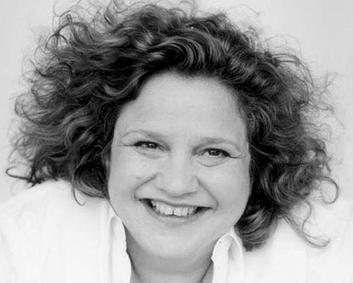
And Third, the last play written by Wendy Wasserstein.  Well, let’s just say that since Wendy passed away ten years ago (actually, nine years and eleven months, but who’s counting?), I feel like she’s been up there, looking down, helping me out when she can. This was one of those times.

Eddie Boroevich and Kathryn Grody in our original production of Third at Theater J.
I worked as Wendy’s typist for the last five years of her life. I was having dinner with Wendy when she met the wrestler who inspired this story. I directed the premiere of this play in Washington, D.C. when it was just a 60-minute two-hander. I sat in the walk-in closet with Wendy, late at night with Lucy sleeping in the main room, as she read to me the pages she had just scribbled that introduced the third character.  After a successful run in D.C., I developed the piece with Wendy into a full-length play.  I can say, with some confidence, that I know that play better than anyone else alive right now.

So, yeah, I could produce this season.

I talked about how I would market each play (I thought I’d flubbed this one horribly, but later Margaret told me I hadn’t, which was nice).  There were other questions – about time commitments, about the Lab Company (I’m going to devote another post in its entirety about the lab company because I’m so psyched about it), about Ithaca.  I flubbed  a few. I made some jokes, which luckily the wi-fi connection was strong enough to convey with some kind of authenticity over Skype. A few days later, back in the states, I was invited to chat with Adam Zonder, the production manager at the Hangar.
The one and only Adam Zonder

Adam has been at the Hangar for twenty years.  He is the institution’s living memory.  He can recite the budget and schedule for the summer with the kind of confidence and knowledge that I find somewhere between impressive and intimidating. As one board member joked with me later, “Just do what Adam says and you’ll be fine.”

Adam was the Production Manager both summers I had spent at the Hangar in the early ‘00s. Luckily, he didn’t hold the way I behaved then (I was young, alright!) against me. In his perfectly frank, undecorated way, he told me what was possible this summer and what wasn’t.  He told me what had worked in the past and what hadn’t.

It is easy, when you’ve never run a theater before, to be seduced by the trust and the power and the responsibility of the job. Adam was sobering without dampening my enthusiasm. He made the job real.

The one and only Josh Friedman
The next day I had an even longer meeting with the Managing Director, Josh Friedman.   Josh and I talked effortlessly – it has already turned out to be both a blessing and a curse, how easily (and much) he and I like to talk. But that meeting wasn’t an interview. It was a conversation, and it harkened back to a piece of advice my Vassar College directing mentor (and now good friend) Chris Grabowksi gave me when I was chubby and closeted and interviewing with Michael Kahn, JoAnne Akalaitis and Garland Wright for Juilliard: make it into a dialogue. You’re going to be spending a lot of time with these people. See how easy that time can be, while still conveying what you need to get across.  

And most of all (and I know it’s become so clichéd it’s almost not worth repeating) but be yourself. The weirder you are, the more important this is. There would be no point in me putting on a three-piece suit and presenting myself to the Board as an experienced administrator. If that’s who they wanted for this job, they wouldn’t have given me an interview. And if I managed to fool them and get the job by presenting myself that way, what a bore to have to be that.

Know who you are and sell that. I am a man-child. I am weird and funny and make jokes about my weight (I’m passing on carbs these days so that I don’t return from Mexico Jabba-sized) and my hair (I don’t wear it - it wears me). At the same time, I started and am still running a successful New York theater company, but our operating budget is in the mid-four digits. I have supported myself as a freelance director, sans trust fund, sans day job, sans inheritance, sans any of those things.  I know what makes a play good, and a good play. Twenty years in New York has given me access to an incredible network of artists. I will have lots to learn about how to run a theater. I will make mistakes. I will give it everything. I will be as a brilliant, hard-working and kind as I possibly can. If that’s who you want, give me the job.

Apparently, that’s who they wanted. I got the job the next day.

Monday, October 12, 2015

An Open Letter To Meg Rosoff

Dear Meg Rosoff,

You have totally missed the point. 

I wish I didn't feel compelled to write you this. It has been a long day for me - I started by making a pot of turkey chocolate chili, then attended a preview for Perfect Arrangement, the off-Broadway show I'm directing, then hosted a meeting for my theater company, where I served aforementioned turkey chili. I would much rather be reading about my friends' outrage on Facebook  about the Oregon Shakespeare Festival's project to translate the Bard's 39 plays, or playing board games online, or watching Attack on Titan.  But when someone is so off the mark in a such a public and egregious manner, it demands correction. It is National Coming Out Day, for god's sake.


The heart of the matter is that everyone deserves to have the experience of reading about themselves.  Yes, of course, you don't have to be a woman in an unhappy marriage in turn-of-the-century Russia who commits suicide by jumping in front of a moving train to appreciate Anna Karenina.

But if you've never had the experience of seeing and reading yourself in a story, you start feeling like your story isn't worth telling. Which isn't that far from feeling like your life isn't as important as those other lives you keep reading about.

Yes, a great story transports you. A great story makes you empathize and sympathize with people and situations you've never imagined.  I would never follow the advice of three witches and kill the king of Scotland to assume his throne. But yes, in a great production of the unmentionable play, I totally get why Mackers has done it all.  

But still, am I wrong for wanting to see queer characters? Armenian protagonists? Non-Israeli Jews? About-to-be-forty-year-olds who have dedicated their lives to the not-for-profit arts and only sometimes regret it?

This is why diversity in story-tellers is so important: so that diverse stories are told authentically.

“Books do not have a job,” you write, then follow up with, “Books are to teach kids about the world.” But isn't that a job? Why do you feel like your definition of a book's job is more valid than someone else's? And since queer black boys exist in the world, wouldn't it behoove a non-queer, non-black boy to read about that character's perspective to learn about the world?

Any attempt to define what books can do is reductive, because books can do anything and everything.

This isn't an "or". This is an "and." Books can teach about the world AND expose us to infinite perspective and character, AND change the world, AND help me get through my rehearsal process, as all 1400 pages of N. K. Jemisin's beautiful Inheritance Trilogy just did. Let books be everything.
 

Thursday, July 23, 2015

What I've Learned About Auditions or, A Love Letter to NY Actors


 What I've Learned About Auditions or, A Love Letter to NY Actors

The first time I cast a show using a full, professional audition process was about ten years ago. As I sat in the room with the casting director, the reader, and the artistic director, I suddenly realized that I had no idea what the hell I was doing. I had sat in on auditions before, mostly for directors whom I was assisting, but that was just a spattering of understudies. I had no idea how much I was supposed to work the actors, if I could interrupt them before they were done with the side, or even how to choose a good side, for that matter.  I didn’t know anything.

I’ve been through this process a many times since then, for off-Broadway, regional and off-off Broadway theaters.  This is a post for directors (about what I’ve learned) and for actors (about what I’ve observed). 

(From L to R): Producers Mark Johannes and Amy Danis of MARS Theatricals, moi, playwright Topher Payne, Producer Dan Shaheen, Michelle Bossy, and Casting Director Stephanie Klapper. 


IN PREPARATION

1.     Use ten-minute slots

Be civilized.  Five minutes just isn’t enough time, because an audition isn’t just about the actor  showing you what work s/he has done. It’s about you working with the actor, and the only way you’ll have enough time to do that is if you use ten-minute slots and if you…

2.     Choose short sides.

Seriously, you know in the first 30 seconds if the actor and the role are the right fit. Don’t waste their time preparing ten pages. If you need to see ten pages, you’re a horrible director.  Besides, short sides allow you time to work with the actors, which leads me to….

DURING THE AUDITIONS THEMSELVES

3.     Work with the actor

Any actor worth their salt, as was EVERY SINGLE ACTOR that I saw this week, comes to the audition prepared, focused, intelligent and rehearsed.  They worked on their sides, looked great, got up that morning, put their audition outfit together and traveled to studio in horrible humidity from all over the city, and sometimes further. One actor (to whom we made an offer) commuted down from the Berkshires  for both the audition and the callback a few days later.  Treat every actor as if they’re traveled that far. 

Even if you don’t think they’re going to get a call back, they might be right for something else you work on.  You might learn something about the part or the role.  They’ve traveled all that way.  See what they can do. And show them what you want. They’re not just auditioning for you – the actor you want might get a conflicting offer, and then they’ll have to choose which project they’re going to work on. How you treat them in the rehearsal room might be an important factor. You’re auditioning for them, too.

4.     Be present

I was exhausted after my week of auditions, they same way I would’ve been after a week of rehearsals. That’s actually a great way to think about auditions: as a series of short rehearsals.  Like rehearsals, they require you to be present so that you can respond to the choices the actor is making. The director is an audience of one. Be the kind of audience member you would like to attend one of your own shows: present, kind, and easily delight-able.

And if you think the actor isn’t reading for the right role, ask them if they mind taking a few minutes to look at a different side. This happens even with a great casting director, and don’t be scared about asking them to look at a different part (another one of our offers is out to an actress who was game enough to read for someone else with no notice). Be especially sensitive if you’re asking the actor to read for a part that’s smaller, or older. But ultimately, I think actors would rather read for a role that they actually had a shot of getting.

THE CALLBACKS

5.     Don’t call someone back you don’t think you’re going to cast

Don’t waste their time because they’re your friend, or you think they’re cute, or you saw them in a show a few years ago and they were amazing and even though they’re not right for this part, wouldn’t it be fun to spend a few more minutes with them?  You are taking hours out of this actor’s life. Don’t do it in vain.

6.     Tell them what you want to see

You’ve called them back for a reason, right? Tell them why – tell them what you and the people in the room responded to, and tell them what you’d still like to see. It shouldn’t be mysterious or enigmatic. You have an idea about the part, they’re bringing something that you’ve responded to.  Identify the space between those things and let them show you what they can do.

AFTER

7.     Email your friends when you know you’re not going to cast them

I described auditioning to my husband like this, “Imagine interviewing twenty of your best friends for a job for which they’re over-qualified, then not being able to hire most of them because there are only three slots.”  He looked horrified. That’s what we have to go through.

Your relationship with your actor friends has to be strong enough to withstand that kind of pressure, and it’s your job to make it as easy as possible. Reach out to them. Tell them they were wonderful. Thank them for coming in.  As the director, you job is to see as many brilliant actors as you can, so that your show has as many options as possible.  As a friend your job is to thank your friends for making that possible.

Your friends will thank you, and write you back, and be so kind that you’ll be amazed.  And if one of them sends you a drunken email at 2AM berating you for not casting them, let it go and tell them you love them. Be a lover, not a fighter.

In many ways, I think, this post is a love letter to the pavement-pounding actors of New York.  Actors are New York’s best and brightest, one of this city’s most potent natural resource.  I could’ve cast my show three times over from the people we saw.  And actors, how do you get off-book so quickly?  I don’t just mean sort of off-book.  I mean like totally and 100% off-book.  And how do you take adjustments and change your performance just like that?  It’s really amazing. You’re really amazing. You are the greatest subsidizers of art in this country.

Bless you all.
mb

p.s.  And please comment - there is so much mystery around the auditioning process, and one of my goals in this post was to blow that open, and get a dialogue going about what you like in auditions, what you don't.  Talk to me!

Monday, April 6, 2015

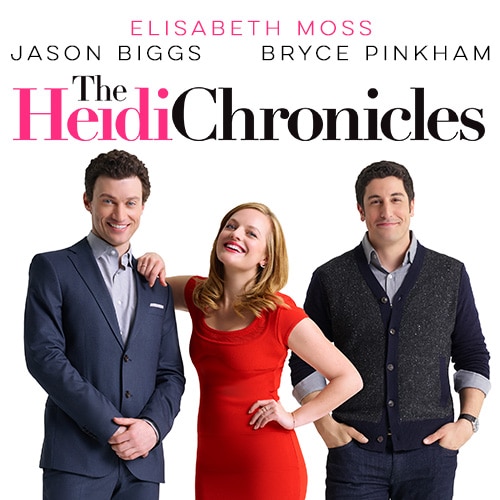
I Should've Brought Tissues: Wendy Wasserstein's Former Typist Reflects on THE HEIDI CHRONICLES

I Should've Brought Tissues

In retrospect, it was stupid of me not to bring tissues.  I can't guarantee that you'll have the profoundly cathartic experience I did at the revival of The Heidi Chronicles on Broadway, since you probably didn't have a day job as Wendy Wasserstein's typist for the last five years of her life.  But it would really be a pity for you to miss this A-class production of this brilliant play.  Do yourself a favor and go.  It's special.  And Pam MacKinnon's direction is firm, clear, specific and light-handed: exactly the touch that Wendy's plays need.

Heidi starts funny and light and a bit odd.  And it does feel dated at first, and not just because the first scene is set in the late '60s.  But the amazing thing about theater is that it acts like a time machine: we, today, have a perspective on the '60s, '70s and '80s, just as the audience did that first watched Heidi in 1988.  It might not be the same perspective as that original audience, but the play educates and triangulates now much in the way it did then, I imagine.


When I directed Blithe Spirit at Syracuse Stage last year, I begged Tim Bond, the artistic director, to let me cut it.  But he insisted against it.  The entertainer in me (the one who learned from Wendy, ironically enough) knew the show could stand to lose around 20 minutes of repetition.  But on opening night, the purist in me loved that our audience listened to the exact same words spoken in the exact same order as its original 1945 audience did.  Theater doesn't just teach about history in content: it does so by form.  Blithe Spirit teaches me about what 1945 audiences enjoyed, just as Heidi teaches me what a late '80s audience had to learn watching a piece that spanned the last thirty years.


Content Over Form

Although the character Heidi certainly has moments of pro-activity, of temper flaring and ego clashing, I think it would be hard to name a more passive protagonist.  Throughout the play, her scene partners (the gay best friend Peter, her on-again/off-again boyfriend Scoop, and her perpetually re-inventing best friend Susan) bulldoze her.  If I stumbled upon an individual scene from this play say, in scene study class, I think I'd be surprised to learn that Heidi is the lead.

Her famous soliloquy breakdown, in the third-to-last scene of the play, is really the breakdown that she's been building up to her entire life.  But in truth, we see that Heidi can only be the active, have a monologue (let alone a breakdown) when she is the only person on stage.  She is a character so used to defining herself as an outsider and as a passive that the only way for her to find the space she needs is for her to be alone.  Without a scene partner.  Isolation is the price of expression.

As a writing feat, it's an incredible thing, to successfully build a story around a passive protagonist.  As a response to the feminist movement, it's an even more astonishing.  Although the play makes it clear when Scoop and Peter bulldoze Heidi on a TV Studio Set (II/2) that men are often the guilty parties here, Susan (who's really Scoop's alter ego) is equally guilty of the same crime in the restaurant one scene later.

 We Both Must Fade

I know that Wendy has a reputation as a boulevard comedienne.  But few writers of that genre crafted plays that spanned 25 years.  I met Wendy on Old Money, generally considered her least successful play, but one that also showed Wendy's desire to experiment with form (it jumped back and forth 80 years over the course of a dinner party thrown in a robber baron mansion on the Upper East Side).  And I can't help but wonder what other experiments in form Wendy might've attempted had she been with us longer.  At least, I hope this production ushers in a Wasserstein Renaissance, full of productions that embrace the possibilities of her texts.

A Story About A Woman Who Got Sad

Wendy once said to me, in that wonderful funny/serious/joking/not-joking way she had, that Heidi was a play about a woman who got sad.  But as someone who'll be turning 40 next year, I feel like I truly relate to Heidi's alienation in a way that I hadn't before.  Yes, it's a story about a woman.  But its universality lies in the profound 40-something sadness you feel when your friends abandon you for their kids and the suburbs, for their partners or professions, to other cities and states and countries.  I recently removed three friends whom I've known for over twenty years from my speed dial because we didn't communicate enough to keep them there for even nostalgic reasons.  I don't know what I would do without the guys I met on the Ramblers soccer team, guys on average 10 years my junior, who haven't yet reached that point in their life that they withdraw.  And that's the story of Heidi: the story of a woman who is about to withdraw in response to the world that has already withdrawn around her, but who finally decides that she can't. 

This post would be remiss without two more things:

First, Bryce Pinkham's performance is, well - this is why we go to the theater, folks.  He'd start talking and I'd start crying.  His scenes with Heidi were sharp, heart-breaking, moving, real.  I've seen him on stage three times in the last two years and each time I feel like he's the best that we've got.  If you know him, tell him I'm a fan.  He's pitch-perfect.

Second, the story of how I scored these tix:  My friends Amy Danis and Mark Johannes, who are MARS Theatricals, were having lunch with Susan Gallin, one of the lead producers of Heidi.  They told her about me.  Then she emailed me and offered me comps.  This is exactly the kind of elegant, classy, random-act-of-kindness thing Wendy herself would've done.  Of course, I was going to find a way to see this show, but it probably would've been from the balcony, and it definitely would've set me back at least one hundred bucks I certainly don't have right now (two hundred to take Rafael, who said, "This is one of the best plays I've ever seen in my life.").  So thanks Amy, Mark and most of all Susan.

And of course, Wendy.  I hear that cackle of your laugh as distinctly as ever.  Especially in the theater.


Monday, December 15, 2014

The New York Times Can Kiss My Ass

The New York Times Can Kiss My Ass

Dear New York Times,
I understand that an organization that produces as much content as you do will, occasionally, produce something impressively tone-deaf (see Alessandra Stanley's piece about Shonda Rhimes last September).  But for the most part, I love your paper.  I read it daily.  I get it on my Kindle and my iPhone, just in case I'm jonesing for some news and one of my gadgets isn't available.  Reading the Sunday Times is probably the only ritual I've performed for over twenty years. 

Imagine my glee when I saw "9 Kisses," in this Sunday's (12-14-14) edition: a movie that promised to show me 9 short films, each one featuring a kiss between two great actors from the last year in movies.   

I like kissing.  I like movie stars.  This'll be fun, I thought.

Each kiss hits a different note, and the piece is successful as a whole, on an aesthetic level, because of the gamut it runs.  In their stolen kiss outside a costume party, Reese Witherspoon and Benedict Cumberbatch show us how furtiveness ups a kiss's sexiness like nothing else.  The unexpected passion of Laura Dern and Steve Carrell's lip-lock is used to great comedic effect.  When Shailene Woodley kisses her trainer Jack O'Connell after accidentally punching him in the face, something unexpected bubbles between them, a surprise that reveals a world underneath.  Each kiss in each of the short films has a definitive, unique tone.

Which is why I find it so incredibly offensive for the only guy-on-guy kiss in this piece to be a desparate ploy, between David Oyelowo and Timothy Spall (4:50 - 5:35).

I encourage the readers to watch all eight minutes of the movie (video box at the top of this blog, or click here) - it's quite enjoyable, for the most part.  Here's the synopsis:  David Oyelowo and Timothy Spall are in a saloon, arm-wrestling.  It looks like David Oyelowo (younger, stronger) is going to win, but then that rascal Timothy Spall kisses his opponent (on the lips, no less!), distracting him and giving Timothy Spall the edge he needs to win.

This kiss is aggressively anti-romantic.  It is a tactic between two real guys partaking in a macho activity, something so butch that it eliminates the possibility that either one of them might be actual homosexuals. Don't worry - your movie tells its viewers - not only is the guy-on-guy kiss de-sexualized as much as possible (it's also the shortest kiss in the flick), none of the characters in this movie are gay men. 


And I think this is really at the heart of why I think your film sucks, New York Times: you were too cowardly to dare to show what a real kiss between two men looks like.  The girl-on-girl action (Jenny Slate & Rosario Dawson, 2:15 - 3:00) is sexy, joyous and full of love.  And I get it - from before we are conscious of sex, we're taught to think that lesbians are sexy while fags are scary.  But this film has an opportunity to combat the nasty, latter part of that stereotype, to show some genuine warmth or romance or kindness between two men kissing.  In failing to do so, you don't just eschew your responsibility: you perpetuate close-mindedness.  

In the behind-the-scenes movie that accompanies "9 Kisses" (entitled, obviously enough, "The Making of 9 Kisses") director Elaine Constantine says that, "We decided it would be all public spaces at night." (1:20)  Gay marriage is legal 35 states in the USA right now.  Wouldn't a more powerful dramatic choice, let alone a less homophobic one, be creating a film where two men kiss after reciting wedding vows to each other, for example?  Or what about a proposal.  Getting down on one knee and proposing to my now-husband was the scariest moment of my life - full of dramatic possibility with infinite richness.

Instead, in depicting the kiss between two men as a desperate ploy and last resort, you reinforce the idea that the only appropriate response to kissing another man is to feel shame.  Well, I think you and the film's director, Elaine Constantine, are the ones who should feel ashamed. 

Or, better yet, do something about it.  I dare you, New York Times and Elaine Constatine: get two great male actors from 2014 movies and create another 45 second film showing them kissing in any scenario that's not drenched in shame.  Show me funny, show me touching, show me stupid.  Show me anything.  But don't show me shame.  I grew up surrounded by it.  I have to deal with looks and threats, still, when I hold my husband's hand in public.  I have had enough shame.

To end on a what I hope is a positive, constructive note: here's a picture of me and my husband kissing at the end of our wedding ceremony.  I thought I'd include it in the hope it might inspire you to see the gorgeous possibilities.


Tuesday, July 29, 2014

Stories of Joy & Triumph

Would it have killed the photographer to tell me to fix my hair?
Stories of Joy & Triumph

It's been a while since I blogged.  The contributing factors:  I haven't really cared about anything enough to blog about it, I've been investing time and resources in my newsletter, which felt like a more efficient means of getting the word out about One Man Guy, and because let's face it: it's hard to imagine an entry that's going to get as many hits as the one about my wedding, and not just because we had a freakin' rainbow, as clear proof we're going to get that God loves the gays.


Recently, however, something got me so riled up that I took the keyboard again.  After a certain public library obtained One Man Guy, it decided to place it in the adult section, instead of Young Adult.  

First of all: how could I possibly know this?
Well, I'll tell you how.  Like most things, it traces back to Vassar College, where I directed a production of Six Degrees of Separation (cast pictures below).  

(Top Row, L to R: Alec Duffy, Ken Perko, Rachel Stack, Linsay Firman, Brian "Dingo" Lamont, Gerard Karsenty, Kevin O'Hara, Kevin Maher.  Middle Row: Geoffry Milam, Milton Welch, Amy Boyce Holtcamp, Michael Bird, Josiah Trager.  Bottom Row: Jeff McKay, Marguerite Moreau, Angela Goethals, Matt Newton.)
I remained friends with the actor playing Flan Kittredge, even after he left New York, through the magic of facebook and a deep affection we shared.  Turns out a relative of "Flan"'s works at a Public Library Whose Name I'm Not Disclosing.  This relative heard about my book, advocated for its purchase even though, "Some dingleberries in charge of such things apparently expressed some concern over its non-traditional content."

The compromise, apparently, was to purchase the book, but to put it in the adult fiction section to make sure that young people's mind aren't polluted by its non-traditional content, even though in an email that "Flan" forwarded to me, "ALL the other membership libraries have it in YA, as does Barnes & Noble."

I have been incredibly moved by young people's reactions to One Man Guy, from the teens I meet at B&N whom I convince to buy the book, to the ones who write me via my website to tell me what the book means to them.  Some samples quotes:

 "It's the girl that you saw at Barnes & Noble a few days ago. :) I finished your book the night that I got it. I really enjoyed. It was really funny and I just couldn't put the book down." -Jasmin

"Hi Michael! I recently finished your book One Man Guy and fell in love with the story. I can relate to the characters. Thanks so much!"  -Jacob


"I'm a part of the LGBTQ community and this book means something to me.  The reason i read this book is because i was looking for a book to read on the plane to Cali and I picked up your book and saw what is was about. My aunt was the one purchasing the book and saw the cover and whisper "no no this supports homosexuality" and would not buy. I did not want to make a scene but I was so angry that i made it a personal goal of mine to read and one day own the book. Thank for make me feel proud of my sexuality and who I love."  -J. Thomas


"Thank you so much for writing this book.. It has given me so much hope that when I come out to my parents they won't freak out.. I'm the same age as Alek is in this book.. It's just made such a difference on how I look at everything."  K.W.   


Truth and Justice and the American Way prevailed, however, as the library's director, in response to this fierce advocacy, decided to move OMG into the YA section.


I'm so grateful for everyone who has championed my little book, and helped it find its readership.

p.s.  I just got an email inquiring about the availability of OMG'S tv/film rights!


Followers